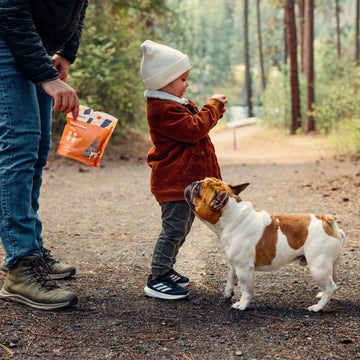

Summer's wrapping up, backpacks are getting packed, and for a lot of households, that means the family pet is about to see a lot less attention during the day. Fuller schedules, earlier mornings, longer stretches of alone time – it's a routine shift that our pets feel just as much as we do.
It's also exactly why #dogenrichment has taken over TikTok and Instagram this year. It's a stat you'll hear often from trainers: 15 minutes of focused mental enrichment can tire a dog out as much as an hour-long walk. Enrichment products that tap into a dog's natural instincts – sniffing, licking, chewing, problem-solving – are going viral for a reason: they work. And chewing, in particular, is one of the simplest and most effective forms of enrichment a pet parent can build into a daily routine.

Why Chewing Counts as Enrichment, Not Just a Snack
Enrichment isn't about entertainment for entertainment's sake – it's about giving a dog's brain and body a job to do. Chewing checks that box in a few specific ways:
- It's a natural instinct. Dogs are wired to chew, gnaw, and work at something with their mouths. Giving them an appropriate outlet reduces the odds they'll redirect that instinct toward furniture or shoes.
- It's calming. The repetitive motion of chewing can help lower stress and settle a dog who's adjusting to a quieter house.
- It fills the gap independently. Unlike a game of fetch, a good chew doesn't require a person on the other end of it – which makes it one of the few enrichment activities that works exactly as well solo as it does with company.
That combination – natural, calming, independent – is exactly why chewing belongs at the center of a back-to-school routine. Always make sure you supervise your pet when they have a chew. Explore the full lineup in our Natural Freeze-Dried & Air-Dried Dog Chew Collection.

Treats: The Enrichment Toy Fuel
Enrichment gives a pet left alone all day a job that helps prevent boredom and pent-up energy, which often surface as destructive chewing, barking, or restlessness. A snuffle mat, puzzle feeder, or slow feeder replaces some of that idle time with a task – sniffing, foraging, working a treat loose – which keeps them occupied and has a genuinely calming effect. Here are some great ideas for pairing turning your Momentum Single Ingredient Treats and Training Bites into enrichment fuel:
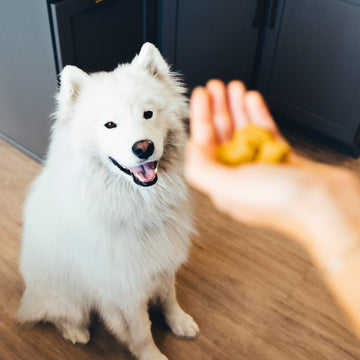
- Lick mats: Crumble a single-ingredient treat like Chicken Heart or Beef Liver into the mat's ridges, or smear a softened piece across the surface. Freeze it for a longer session.
- Slow feeder bowls and trays: Scatter Training Bites throughout the ridges and grooves to give your pet a tasty puzzle to solve.
- Treat-dispensing toys: Load Training Bites or broken pieces of Chicken Breast or Pork Tenderloin into the cavity. Both break down small enough to fit standard dispensing openings without crumbling into dust.
- Snuffle mats and rope toys: Tuck single-ingredient treats into the mat's fabric folds or a rope toy's fibers so your dog has to sniff and dig them out rather than eat straight off the surface.

A Simple Back-to-School Enrichment Routine
You don't need to overhaul your pet's day to make this work. A few small additions go a long way:
- Morning: A chew – bully stick, turkey neck, or fish chew – while the house is still getting ready.
- Before you leave: A frozen lick mat or a loaded slow feeder, timed to the first stretch alone.
- Afternoon: A treat-dispensing toy loaded with Training Bites for a mid-day reset.
- Evening: Another chew, or a quick training session with training treats to reconnect.
Small, consistent enrichment throughout the day does a lot for a pet adjusting to a new schedule.
Frequently Asked Questions
Is chewing actually a form of enrichment, or just something to keep a dog busy? Chewing is a genuine form of enrichment because it engages a dog's natural instincts and gives them an active mental task, not just a distraction. It can also have a calming effect, which makes it especially useful during routine changes like a return to school schedules.
What treats work best in a lick mat? Softer, crumbly treats hold to a lick mat's ridges better than a hard chew. Single-ingredient treats like Chicken Heart, Beef Liver, or Turkey Liver crumble and smear easily, and freezing the loaded mat extends the activity.
Can I put Training Bites in a slow feeder bowl? Yes. Training Bites are small and bite-sized by design, which makes them a good fit for the grooves and ridges in most slow feeder bowls and trays – often a better fit than standard kibble.
Is it safe to leave my dog alone with a chew? Chews should always be given under supervision, so they're best worked into times when someone's home. For unsupervised stretches, a stuffed lick mat or a loaded puzzle feeder is the safer choice.
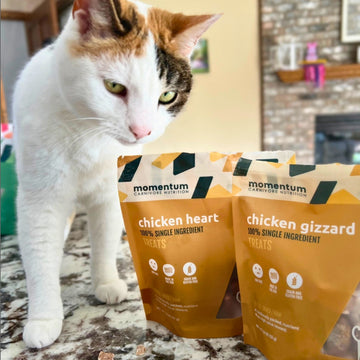
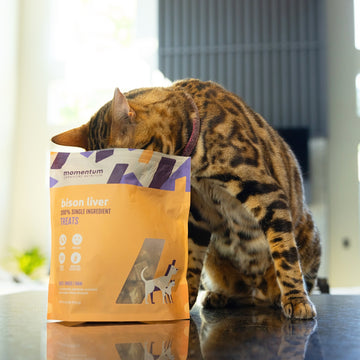
Can cats join in on any of this? Yes – single-ingredient treats and Training Bites are formulated for both dogs and cats, so the lick mat and puzzle toy ideas above work for cats too. Chews (ears, snouts, sticks, heads, fish chews) are dog-only.
Do freeze-dried treats hold up in puzzle toys, or do they crumble too fast? Single-ingredient treats and Training Bites are firm enough to load into standard dispensing toys without turning to dust, though very tiny openings may need a slightly broken piece to fit.
Ready to build your dog's back-to-school routine? Shop Momentum's full collection and stock up before the first day back.