
Flip over almost any bag of dog treats and you'll find a wall of words – some familiar, some not, and a few that seem designed to sound better than they actually are. Most pet parents want to feed their dog or cat something real, but the label doesn't always make that easy to figure out.
Here's the good news: once you know a few basic rules, reading a pet treat ingredient label takes about ten seconds. This guide breaks down exactly what to look for, what to watch out for, and why the ingredient list is the one part of the package that never lies.
Rule Number One: Ingredients Are Listed by Weight
By law, pet treat ingredients are listed in order from heaviest to lightest. That means whatever is first on the list is what your pet is eating the most of – and whatever is buried near the bottom is present in only a small amount, no matter how big it looks on the front of the bag.
This is why a treat can advertise "chicken" on the front and still list chicken fourth or fifth, behind grains, glycerin, or other fillers. The front of the package is marketing. The ingredient list is the actual product.

Red Flags to Watch For
Once you're reading ingredient by ingredient, a few terms are worth pausing on:
- Vague protein terms. "Meat by-products," "animal digest," and "poultry meal" are far less specific than a named protein like chicken, beef heart, or duck. That vagueness can mean lower-quality sourcing or a blend of parts that isn't clearly identified.
- The word "flavor." If you see "chicken flavor" instead of "chicken," that usually means the actual source of the flavor isn't named – it may be artificial or synthetic rather than real meat.
- Artificial preservatives. Ingredients like BHA, BHT, and ethoxyquin extend shelf life but aren't things most pet parents want in a daily treat. Natural preservatives like mixed tocopherols (Vitamin E) or rosemary extract do the same job without the same concerns.
- Artificial colors. Dyes add zero nutritional value – they're there purely so the treat looks a certain way to you, not your pet.
- Fillers. Corn, soy, and wheat are common low-cost additions used to bulk up a product without adding real nutrition.
- Excess salt or added sugar. A small amount is normal in some recipes, but it shouldn't be doing the heavy lifting in a treat that's supposed to be a healthy reward.
None of these ingredients show up because they're good for your pet. They show up because they're cheap, shelf-stable, or convenient to manufacture with.
Buzzwords That Sound Good but Don't Guarantee Much
Front-of-package claims are designed to catch your eye, and most of them are only loosely regulated:
- "Natural" doesn't guarantee minimal processing or the absence of additives.
- "Grain-free" only tells you one thing is missing – it says nothing about everything else on the list.
- "Human-grade" refers to a production standard, not necessarily the ingredient list itself.
- "Limited ingredient" has no fixed definition. One brand's "limited ingredient" treat might have three ingredients; another's might have ten.
These claims aren't necessarily false, but none of them replace actually reading the list. The ingredient panel is the only place on the package that has to tell the truth.
What a Truly Clean Label Looks Like – and Where It Comes From

Once you know what to avoid, the gold standard becomes obvious: a treat with one or two named, whole-food ingredients and nothing else to decode.
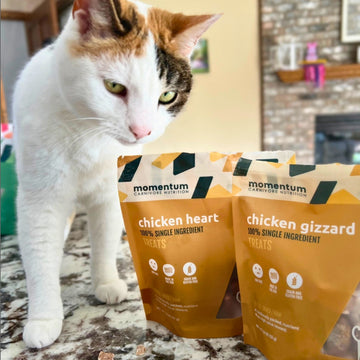
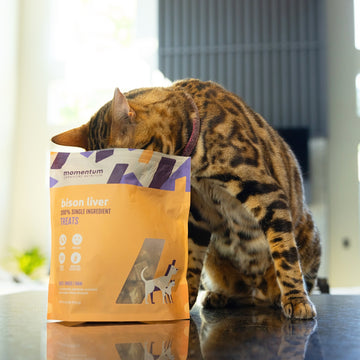
That's the entire philosophy behind Momentum Carnivore Nutrition. Every product we make – whether it's a freeze-dried treat, a Training Bite, or a natural chew – is built the same way: real animal protein, and little to nothing else.
- Our freeze-dried single ingredient treats are exactly that: one named protein, like turkey heart or wild-caught salmon, freeze-dried and nothing added.
- Our Training Bites take it to two ingredients – for example, beef kidney and beef heart – so you get a bite-sized training reward without sacrificing a clean label.
- Our natural dog chews follow the exact same rule. A bully stick is beef. A turkey neck is turkey. A pig ear is pork. Nothing else is added to any of them.
A clean ingredient list is half the story – the other half is knowing where that ingredient actually came from. Momentum ties every protein back to a real, named source: our pork is sourced from Wisconsin, our chicken from North Dakota, our turkey from Michigan, our duck from Illinois and Pennsylvania, our bully sticks from Idaho, and our fish chews from sustainably managed waters off Iceland. More than 6 in 10 pet owners say they prefer to know the country where their pet's food is made, and we think that same transparency should extend to treats. A single ingredient you can name, from a source you can name, is what a genuinely clean label looks like.
Quick Guide to the Guaranteed Analysis Panel
Separate from the ingredient list, you'll also find a Guaranteed Analysis panel. This shows the minimum or maximum percentages of key nutrients – typically crude protein, crude fat, crude fiber, and moisture. It's a helpful way to compare the nutritional profile of two treats at a glance, but it doesn't tell you what those nutrients came from. For that, you still need the ingredient list.
Frequently Asked Questions
What's the first thing I should look for on a dog treat label?
Look at the first ingredient. Since ingredients are listed by weight, the first one makes up the largest portion of the treat. A named, specific protein – like chicken or beef heart – listed first is a good sign.
Are grain-free treats automatically healthier?
Not necessarily. Grain-free only means one specific ingredient category is absent. The rest of the ingredient list – fillers, preservatives, artificial additives – still needs to be checked on its own.
What does "meat by-product" mean?
It refers to parts of an animal not specifically named as muscle meat, and it's less transparent than a specific ingredient like duck liver or beef heart. It isn't always harmful, but it does make it harder to know exactly what you're feeding your pet.
What makes a treat "single ingredient"?
A true single ingredient treat contains exactly one component – typically one named animal protein – with nothing else added, not even a preservative.
Does it matter where a treat's ingredients are sourced?
Yes. A short ingredient list paired with a clearly named, traceable source – like a specific US state or fishery – gives you a fuller picture of quality than the ingredient list alone.
Ready to see what a clean label actually looks like in the bowl? Shop our single ingredient treats, Training Bites, and natural chews – real ingredients, real sources, nothing to decode.